Information |
Advanced TechnologyImplant 3D planning
This 3D-planning software implant3D enables a Us to process computertomographic scans (CT-scans) in DICOM-3-Format, which have been acquired by a radiologist and transfered to him (typically on CD-ROM) directly to his computer, a "central processing" is not required.
Using the CT-scans now a detailed exam is made, if there is sufficient bone available and what the ideal position for the implant is in regards to prosthetics and implantology.
After position, length, diameter and product type have been chosen for each implant a drilling plan is generated for the positioning device. Piezotome surgery unitPiezotome is an innovative, powerful, precise and quiet-running piezoelectric generator for periodontal and pre-implant surgery, developed for delicate procedures such as osteotomy, osteoplasty, crest expansion or sinus lift. Driven by highly sophisticated electronics - SP Newtron™ technology - it benefits from several instrument control systems:
• The Push-Pull system, which gives perfect, continuous control of the amplitude of tip vibrations, and helps preserve fragile tissues; • The Feed-Back principle, or constant and instantaneous adaptation of the power, depending on the resistance encountered by the tip (torque), which renders handling light and precise and operations that are fatigue-free. These three systems make up the “Cruise Control System™”, which leaves the clinician free to concentrate on the operation, in total safety. Furthermore, the Satelec R&D teams have developed innovative software integrated into the electronic board to alternately drive the Piezotome mode (surgery) or the Newtron mode (periodontal, endodontic treatments etc.). The left and right handpieces are interchangeable and are recognized automatically by the Piezotome unit. The Piezotome handpiece will not cause any overheating, loss of power or extraneous vibration (avoiding the risk of necrosis), therefore the procedure remains precise, comfortable and secure, however intense the surgery. Laser DentistryFor patients who do not look forward to needles, drilling, or numbness, Laser Dentistry, may be the right choice. Laser dentistry is one of dentistry's latest advances. The Laser delivers energy in the form of light. Depending on the intended result, this energy travels at different wavelengths and is absorbed by a "target." In dentistry, these targets can be enamel, decay, gum tissue, or whitening enhancer. Each one absorbs a different wavelength of light while reflecting others. Laser dentistry can be used for both tooth and soft tissue related procedures. Often times no local anesthesia is required. Unlike the dental drill with laser dentistry there is no heat or vibration, making the procedure quite comfortable for most patients. For soft tissue (surgical) procedures it eliminates the need for suturing and healing is much faster. Lasers can be used to diagnose cavities. They can find hidden decay in teeth in early stages, and in some cases the decay can be reversed through hygiene and fluoride treatment and may never need filling. Areas of dental care that benefit from laser technology:
Dental lasers have been shown to be safe and effective for treating both children and adults. Gum Disease Laser TherapyPeriodontal or gum disease happens when bacteria gets below the gum line and the attachment between the gum and tooth is lost. Three out of four Americans have some form of periodontal disease and only 3 out of 100 will ever get treated before its too late. Gum disease is a silent, chronic, painless and communicable bacterial infection that often goes undetected or ignored until severe gum and bone destruction is unbearable and no longer able to be ignored. Left untreated gum disease can cause tooth loss and traditional treatment can hurt. The latest conservative gum therapy uses a laser. The laser gently disinfects and evaporates diseased tissues from around the tooth and inside the gum pocket. This treatment interrupts the bacterial destruction of the tissues and bone giving the gum pocket a chance to heal. Systematic repeated visits, generally 2-8, allow the gum pocket to be disease-free and sometimes allow tissues to reattach to the pocket back to a normal or near-normal depth. This new laser therapy is gentle, less painful, has a quick recovery. While surgery may still be indicated for severely advanced periodontal cases, laser therapy is a much more conservative, effective and comfortable option for beginning to moderate periodontal cases. Intraoral CameraMany patients, especially younger patients, are very familiar with the latest technology and are more comfortable with the high tech practice. Computers and TV screens are their primary method of information processing. We utilizes intraoral camera technology that helps enhance your understanding of your diagnosis. An intraoral camera is a very small camera. In some cases, an intraoral camera is just a few millimeters long. An intraoral camera allows our practice to view clear, precise images of your mouth, teeth and gums, in order for us to accurately make a diagnosis. With clear, defined, enlarged images, you see details that may be missed by standard mirror examinations. This can mean faster diagnosis with less chair-time for you! Intra oral cameras also enable our practice to save your images in our office computer to provide a permanent record of treatments. These treatments can be printed as for you, other specialists, and your lab or insurance companies. Precision DentistryWhen you seek care at our office, you are assured that we utilizes the latest in technology to enhance the quality and fit for your dental care. For the most precise aspects of restorative procedures, we use electric hand-pieces. This results in extraordinarily precise interfaces between your tooth and your new restoration (crown, veneer, or filling). This will bring more comfort to you as well. With a more precise tool, there is less vibration and less noise! Digital X-Rays:
Digital X-rays offer more precision since we view the image on a computer monitor, instead of holding up a 35mm film up to the light. Digital X-rays results in 1/6th the radiation exposure to you. |
|
Sitemap Location in Budapest H-1075 Budapest Király str. 11. |
 Phone Hungary: (36) 204747322 Dr. Reza Morid: (36) 13227824 |
| implants | : : | crowns | : : | veener | : : | filling | : : | inlays | : : | bridges | : : | whitening | : : | extraction |
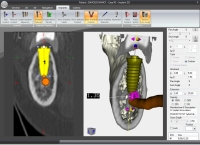 Implant3D is a software package that allows Us to perform a 3D implant simulation directly on out computer. We can simulate the implant position on 2D & 3D models, identify the mandibular canal, draw bone model panoramics and sections, show the 3D bone model and calculate the bone density. By means of Implant3D we can plan the prothesis implant operation more safely, efficiently and quickly.
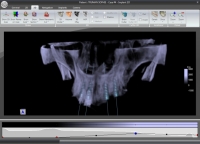 If during CT-scanning the patient wears a barium-sulfate covered (radioopaque) template, which has been made from a prosthetics wax-up, then the proposed prosthetics will be well visible in the CT images. At this time no titanium tube is yet placed.
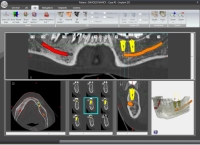 IThe software enables you to move implants freely and interactively in real-time through the CT-dataset and view it in 2D slices and in 3D images, thereby exploring different alternatives for treatment.
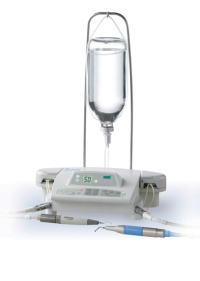 • Automatic, real time frequency adjustment in the 28-36kHz range, depending on the acoustic response of the tip, which allows excellent tactile sense restitution;
| Budapest Implant | www.budapestimplant.com |